Energy-Efficient Industrial Furnaces: Technology and Payback Guide 2026
Energy-Efficient Industrial Furnaces: Technology and Payback Guide 2026
Industrial furnaces consume enormous amounts of energy in heat treatment, metal processing, and ceramics manufacturing. In 2026, energy-efficient furnace technologies are helping plants across the USA, UK, Germany, Netherlands, Italy, and France reduce fuel costs and emissions while maintaining product quality.
This guide compares furnace technologies, efficiency strategies, and payback expectations for industrial heat treatment applications.
Table of Contents
- Energy-Efficient Furnace Technologies
- Heat Recovery and Recuperation
- Advanced Insulation and Lining
- Combustion Controls and Automation
- Technology Comparison
- Payback and ROI Analysis
- Industry Applications
- Frequently Asked Questions
Energy-Efficient Furnace Technologies
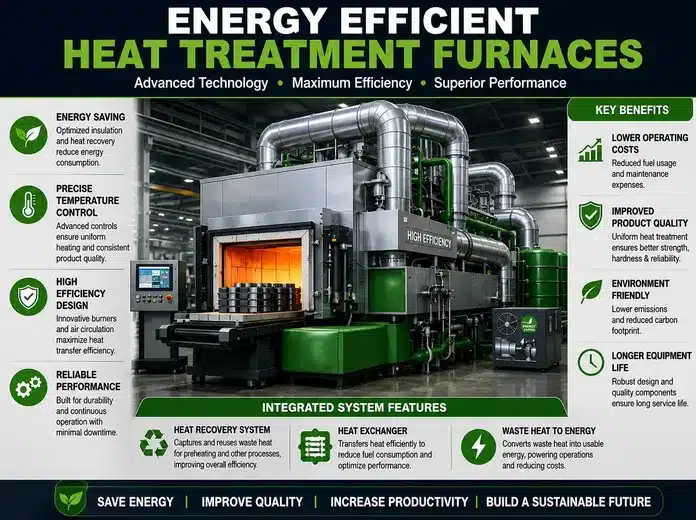
Modern industrial furnaces use a combination of advanced burners, heat recovery, insulation, and controls to minimize energy use. The best technology depends on process temperature, atmosphere requirements, and production volume.
Regenerative Burners
Regenerative burners capture waste heat from exhaust gases and use it to preheat combustion air. They can improve fuel efficiency by 30% to 50% compared to cold-air burners.
Recuperative Burners
Recuperative burners use heat exchangers to preheat combustion air. They offer moderate efficiency gains with simpler maintenance than regenerative systems.
Electric and Induction Heating
Electric furnaces and induction heaters eliminate direct combustion emissions. They are increasingly attractive where renewable electricity is available and carbon pricing is high.
Vacuum Furnaces
Vacuum furnaces provide precise atmosphere control for aerospace and medical heat treatment. Modern designs incorporate improved insulation and recirculation systems.
Heat Recovery and Recuperation
Waste heat recovery captures thermal energy from exhaust gases and uses it for preheating, drying, or generating hot water. German heat treatment plants commonly use recuperators to preheat combustion air.
Advanced Insulation and Lining
Lightweight ceramic fiber and microporous insulation reduce heat loss through furnace walls. Upgrading insulation is often a low-cost way to improve efficiency.
Combustion Controls and Automation
Modern combustion controls adjust air-fuel ratios in real time to maintain optimal efficiency. Oxygen trim controls and variable speed blowers reduce excess air and fuel consumption.
Technology Comparison
| Technology | Efficiency Gain | Best For |
|---|---|---|
| Regenerative burners | 30% - 50% | High-temperature furnaces |
| Recuperative burners | 15% - 30% | Medium-temperature processes |
| Electric heating | 85% - 95% site efficiency | Low-carbon operations |
| Induction heating | Very high for specific parts | Surface hardening, melting |
| Vacuum furnaces | Quality and atmosphere control | Aerospace and medical |
Payback and ROI Analysis
Payback periods for furnace efficiency upgrades vary widely. Simple controls and insulation improvements may pay back in one to two years, while regenerative burner retrofits may take three to five years.
| Upgrade | Investment | Typical Payback |
|---|---|---|
| Combustion controls | \$10,000 - \$100,000 | 1 - 3 years |
| Insulation upgrade | \$20,000 - \$200,000 | 1 - 4 years |
| Recuperator retrofit | \$50,000 - \$500,000 | 2 - 5 years |
| Regenerative burner system | \$200,000 - \$2,000,000 | 3 - 7 years |
Industry Applications
Energy-efficient furnaces are used in steel heat treatment, aluminum melting, glass manufacturing, ceramics firing, and semiconductor processing. Italian and German metalworking industries have invested heavily in regenerative systems.
Frequently Asked Questions
What is the most energy-efficient industrial furnace?
The most efficient furnace depends on the process. Regenerative burners excel in high-temperature applications, while induction heating is very efficient for specific metal heating tasks.
How much energy can a regenerative burner save?
Regenerative burners typically reduce fuel consumption by 30% to 50% compared to conventional cold-air burners.
Is electric heating better than gas?
Electric heating can be more efficient and cleaner, especially with renewable electricity. However, operating costs depend on local electricity and gas prices.
What is the fastest payback upgrade?
Combustion controls, oxygen trim, and insulation upgrades often deliver the fastest paybacks.
Do energy-efficient furnaces affect product quality?
Properly designed systems maintain or improve temperature uniformity and atmosphere control, often enhancing product quality.
Are grants available for furnace upgrades?
Yes. Many European countries and US states offer grants, tax incentives, or low-interest loans for energy-efficiency upgrades.
How often should furnaces be serviced?
Routine maintenance should be performed quarterly or semi-annually, depending on operating hours and process requirements.
Conclusion
Energy-efficient industrial furnaces offer a proven path to lower energy costs and reduced emissions. By selecting the right technology and prioritizing upgrades with strong payback, manufacturers can improve both economics and sustainability.
Heat treatment plants across the USA, UK, Germany, Netherlands, Italy, and France that invest in furnace efficiency in 2026 will strengthen their competitive position while meeting tightening environmental regulations.
Comments (3)