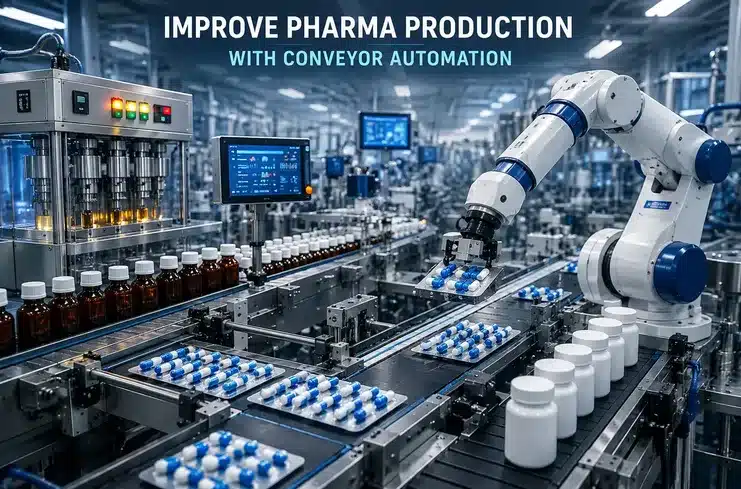
Pharma Production Automation for Regulatory Compliance and Yield 2026
Pharma Production Automation for Regulatory Compliance and Yield 2026
Pharmaceutical manufacturing is undergoing a digital transformation. In 2026, companies across the United States, United Kingdom, Germany, Netherlands, Italy, and France are automating production processes to improve yield, ensure regulatory compliance, and accelerate batch release. Automation in pharma is not only about speed; it is about creating consistent, data-rich, and auditable operations.
This guide examines how automation supports pharmaceutical production. It covers process control, batch records, manufacturing execution systems, quality by design, and the regulatory framework that shapes technology choices.
Table of Contents
- Automation Trends in Pharmaceutical Manufacturing
- Batch Process Control
- Electronic Batch Records
- MES and ERP Integration
- Quality by Design and PAT
- Contamination Control
- Serialization and Traceability
- Regulatory Compliance
- Yield Optimization
- Frequently Asked Questions
Automation Trends in Pharmaceutical Manufacturing
Modern pharmaceutical plants use distributed control systems, robotics, machine vision, and continuous manufacturing technologies. The shift from paper-based records to electronic systems is accelerating as regulators encourage data integrity and real-time release. Industry 4.0 concepts such as digital twins and predictive analytics are beginning to mature in pharma applications.
Batch Process Control
Recipe Management
Automated recipe management ensures that each batch follows approved parameters for materials, equipment, and process steps. Version control prevents unauthorized changes.
Process Analytical Technology
PAT tools measure critical quality attributes during processing. Near-infrared spectroscopy, particle size analyzers, and pH probes provide data for real-time adjustments.
Alarm Management
Effective alarm systems help operators respond to deviations without being overwhelmed by nuisance alarms. Alarm rationalization improves safety and reduces batch failures.
Electronic Batch Records
Electronic batch records replace paper logbooks with digital workflows. They enforce good documentation practices, eliminate transcription errors, and speed up review and approval. EBR systems are a cornerstone of data integrity in GMP operations.
MES and ERP Integration
Manufacturing execution systems coordinate production activities on the shop floor. Integration with ERP enables demand-driven scheduling, material traceability, and accurate inventory management. German and Dutch pharma companies are leaders in MES deployment.
Quality by Design and PAT
Quality by Design builds quality into the process rather than testing it into the product. Process analytical technology provides the data needed to understand and control variation. Together, QbD and PAT support continuous verification and real-time release.
Contamination Control
Automation reduces human intervention in sterile manufacturing. Robotic filling, isolator technology, and automated disinfection systems lower contamination risk. Environmental monitoring systems track particle and microbial levels continuously.
Serialization and Traceability
Serialization assigns unique codes to individual saleable units. This supports anti-counterfeiting efforts, recall management, and regulatory traceability requirements. Automated vision and labeling systems ensure accurate code application and verification.
Regulatory Compliance
| Regulation | Focus Area |
|---|---|
| 21 CFR Part 11 | Electronic records and signatures |
| Annex 11 | Computerized systems in GMP |
| ICH Q8-Q12 | Quality risk management and lifecycle |
| EU GMP Chapter 4 | Documentation |
Yield Optimization
Yield improvements come from reduced deviation rates, better process control, shorter changeovers, and lower rejection rates. Data analytics identify patterns that lead to batch losses. Even small percentage improvements translate into significant value for high-cost products.
Future Trends and Regional Considerations
Modular and Flexible Manufacturing
Modular and Flexible Manufacturing is reshaping how organizations approach pharma production. It addresses critical performance gaps while creating opportunities for efficiency, compliance, and competitive differentiation.
Organizations in the Netherlands, Italy, and France are integrating Modular and Flexible Manufacturing into their operations to reduce risk, lower costs, and improve outcomes. In 2026, this trend is accelerating as digital tools, tighter regulations, and customer expectations drive investment.
AI-Driven Process Optimization
AI-Driven Process Optimization is reshaping how organizations approach pharma production. It addresses critical performance gaps while creating opportunities for efficiency, compliance, and competitive differentiation.
In Italy, France, and the United Kingdom, engineering teams are using AI-Driven Process Optimization to solve long-standing challenges in pharma production. The approach is gaining traction among both large enterprises and specialized suppliers.
Global Harmonization of Data Standards
Global Harmonization of Data Standards is reshaping how organizations approach pharma production. It addresses critical performance gaps while creating opportunities for efficiency, compliance, and competitive differentiation.
Facilities in the United States, Germany, and the United Kingdom demonstrate that Global Harmonization of Data Standards can deliver practical value in pharma production without requiring massive capital outlays. Scalable deployment models are helping smaller players participate.
Frequently Asked Questions
What is the main benefit of pharma production automation?
Automation improves consistency, reduces human error, strengthens compliance, and provides data for continuous improvement.
How does automation affect regulatory compliance?
Automation supports compliance through enforced workflows, electronic signatures, audit trails, and real-time monitoring.
What is an electronic batch record?
An electronic batch record is a digital system that guides operators through production steps and captures all critical data automatically.
Can small pharma manufacturers afford automation?
Yes. Scalable MES and EBR solutions are available for smaller operations, often deployed in phases.
What is real-time release testing?
Real-time release testing uses process data and analytical results to release a batch without traditional end-product testing.
Conclusion
Pharmaceutical production automation is essential for companies that want to improve yield and meet evolving regulatory expectations in 2026. By integrating process control, electronic records, MES, and PAT, manufacturers can create agile, compliant, and data-driven operations that deliver consistent life-saving products.
Comments (3)